



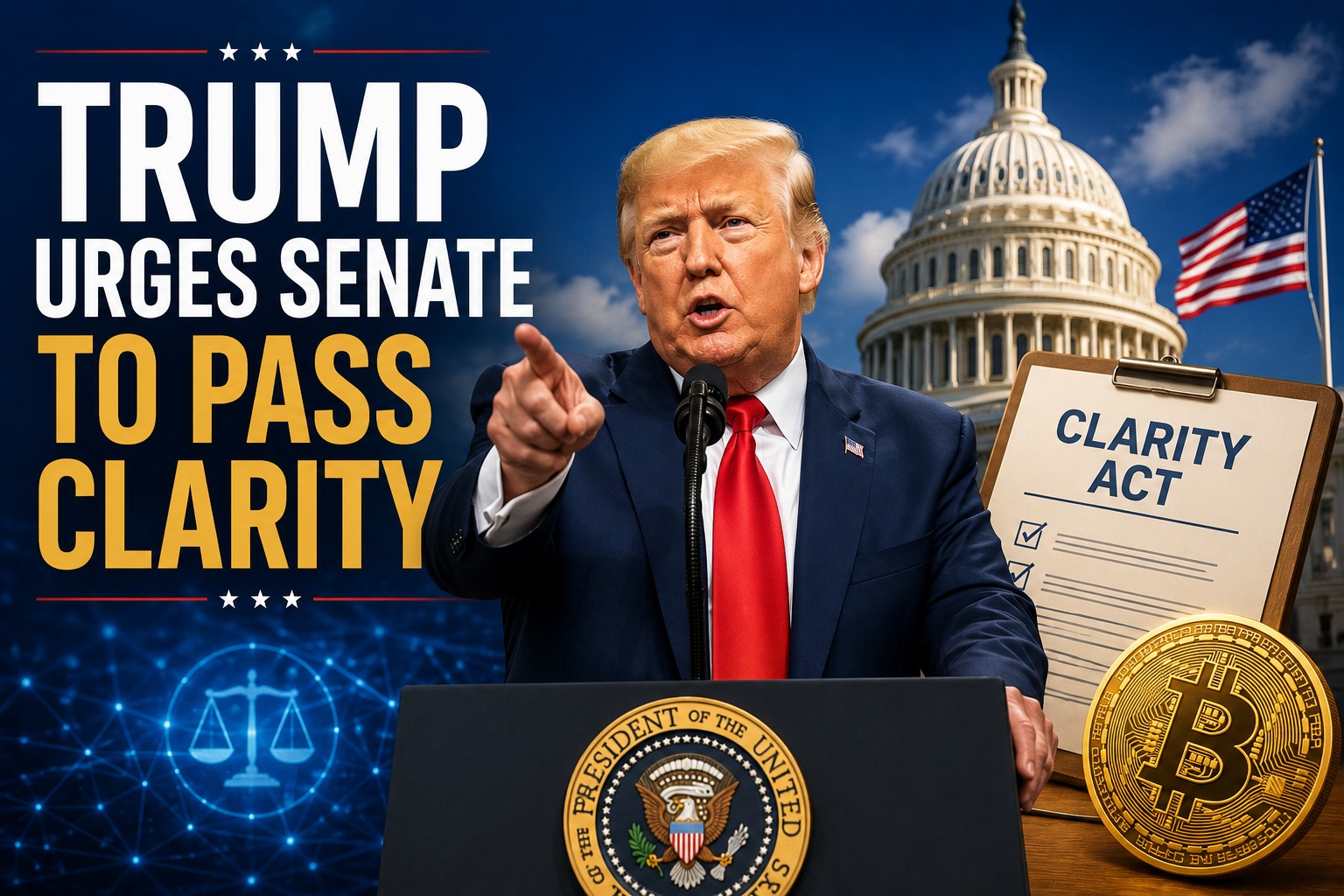
U.S. President Donald Trump met at the White House with executives from some of the largest cryptocurrency companies and urged the Senate to accelerate the passage of the CLARITY Act. The bill is intended to establish clearer rules for the U.S. digital asset market and define how regulatory authority should be divided among federal agencies. The meeting was part of a four-day administration campaign focused on supporting the crypto industry and developing a new regulatory framework.
White House and Crypto Industry Back CLARITY
Executives from Coinbase, Kraken, Gemini, Ripple, Robinhood and Chainlink Labs attended the event alongside U.S. regulators. The meeting marked the third day of a coordinated four-day initiative during which authorities have been introducing measures related to cryptocurrencies, stablecoins and digital financial markets. According to available information, participants also discussed the future direction of U.S. digital asset policy, proposals from industry representatives and possible new initiatives involving Bitcoin.
During his remarks, Trump said the U.S. Commodity Futures Trading Commission (CFTC) is working on conditions that could potentially open the U.S. market to decentralized exchange Hyperliquid. The platform has previously restricted access for U.S. users because of regulatory and enforcement risks. Trump described CLARITY as an important part of the future crypto regulatory framework and said passing the bill could help the United States remain competitive in digital assets and technological innovation, including in its rivalry with China. Coinbase CEO Brian Armstrong also supported the initiative, arguing that comprehensive legislation could preserve the current administration’s progress and create long-term rules for the industry.
Regulators Are Preparing New Crypto Rules in Parallel
The push for CLARITY comes alongside several initiatives from federal agencies. The U.S. Treasury Department has introduced a proposal that would determine when a stablecoin is considered issued or sold under the GENIUS Act. These criteria will help determine which issuers require a federal license and which may operate under state-level authorization once the relevant provisions take effect.
At the same time, the U.S. Securities and Exchange Commission (SEC) introduced its Reg Crypto initiative. The proposal would establish a dedicated fundraising framework for crypto projects and provide clearer requirements for companies issuing digital assets. In addition, the new CFTC Innovation Advisory Committee is holding its first meeting and is expected to advise the regulator on cryptocurrencies, artificial intelligence, prediction markets and other rapidly developing financial technologies.
The Decision Now Rests With the Senate
Despite support from the White House and major crypto companies, CLARITY is still awaiting action in the Senate. A vote to end debate and move the bill forward is expected after senators return from recess on September 15. To advance the legislation, Republicans may need support from several Democrats or reach a compromise on some of the bill’s more controversial provisions.
One of the most difficult issues remains the potential conflict of interest involving government officials who earn income from cryptocurrency projects. Digital assets and companies linked to Donald Trump’s family are receiving particular attention, making ethics provisions and the financial interests of senior public officials an important part of bipartisan negotiations.
While CLARITY remains under discussion, the administration is continuing to accelerate the development of a broader regulatory systеm for digital assets. Federal agencies are preparing their own rules for stablecoins, crypto companies, tokens and new financial products while Congress considers the legislation. This allows regulators to gradually build the necessary framework without waiting for the entire legislative process to conclude. If the CLARITY Act receives enough support in the Senate, it could become one of the most important pieces of U.S. crypto legislation, establishing clearer requirements for exchanges, token issuers and other digital asset market participants. The Trump administration is currently using both political and regulatory tools to accelerate the bill’s passage, while major crypto industry leaders are publicly backing the creation of a stable and long-term regulatory framework for digital assets in the United States.