



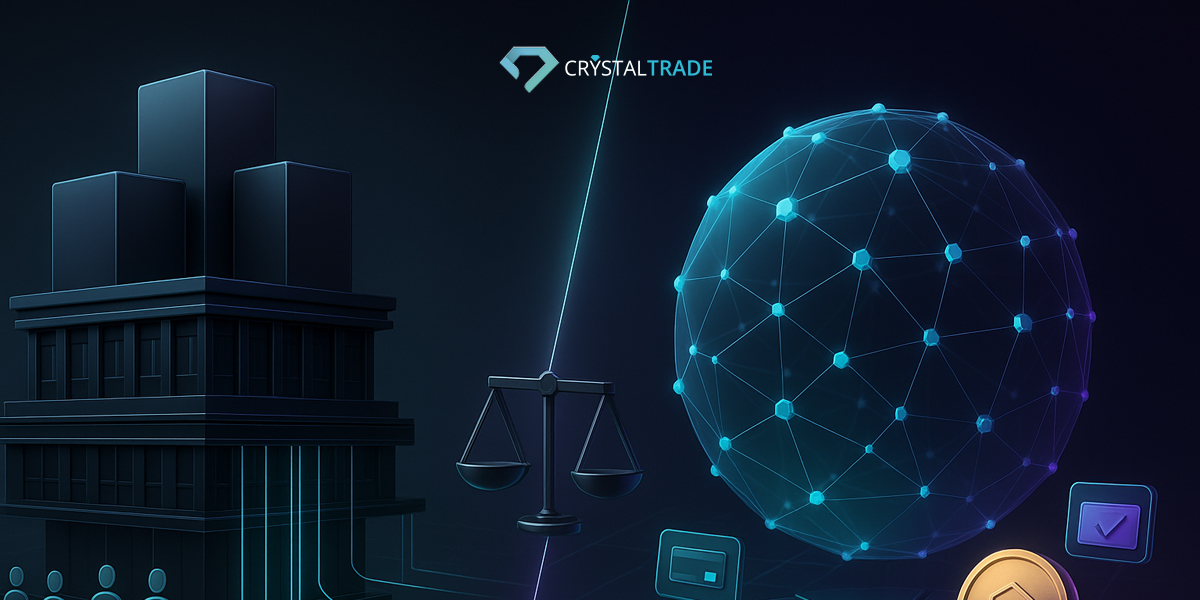
In short: we’re talking about two “modes” of the internet. Web2 is the one we’ve lived in for the past 15 years: convenient and fast, but at the cost of your data. Web3 is a new model where the rules are written in code, your data and assets belong to you, and decisions are made by the community. Below is the difference in plain terms, without extra fluff.
Web2: an internet mall where you’re a visitor
The second web looks like a huge shopping mall run by a handful of corporations (Google, Meta*, Amazon, etc.).
- You “enter the mall” — open a social network or a search engine — and use the services for free.
- While you scroll and watch videos, the owners record what you search and like and whom you interact with.
- The key point: your data becomes the product — it’s used and sold to advertisers.
- At any moment they can shut down your “kiosk” (account) for rule violations — you don’t have property rights.
Bottom line: in Web2, platforms own the infrastructure and your data; you’re a guest on their turf.
Web3: an internet co-op where you’re a co-owner
- Data and ownership records aren’t on corporate servers but in a blockchain — a shared, open “ledger” maintained by independent nodes. Tampering with entries is practically impossible.
- You own the assets yourself. Login via a crypto wallet — your digital passport. NFTs, in-game tokens, balances — are recorded to you and cannot be seized without your consent.
- Rules are code. Smart contracts move funds/assets when conditions are met — without intermediaries or “manual control.”
Bottom line: in Web3 you control your data and assets, and governance is distributed among participants.
Quick summary: Web2 vs Web3
| Criterion | Web2 (today) | Web3 (future) |
|---|---|---|
| Who’s in charge? | Large corporations | User community |
| Who owns the data? | Platforms (can monetize it) | You (you decide what to disclose) |
| Money | Fiat, banking rails | Cryptocurrencies (BTC, ETH, etc.) |
| Where does it run? | Private servers | Blockchain (decentralized) |
| Examples | Facebook*, YouTube, Instagram* | Brave, Uniswap, metaverses |
What’s “better” in practice?
- Web2 — familiar, fast, convenient. The price is privacy and dependence on platform rules.
- Web3 — freedom, control, new ways to earn. The price is complexity, risks, and some tech that’s still “rough around the edges” (in places it’s still the “Wild West”).
Simple takeaway
Web2 is our present. Web3 is the likely future, where you’re your own boss. It’s worth understanding now: it’s the next turn in the internet’s evolution and a chance to enter promising areas early.
*Meta is designated as an extremist organization and is banned in several countries.